

Is Tech Giving Us an Intermediate Mean-Reverting Opportunity to Reload? Or Is This a Trend-Reversal as Some Are Predicting?
These Cheat Sheet Stacks Will Come In Handy....

I’ve spent the week reading tech company earnings reports, the work of some key tech bloggers, tech-analyst earnings outlooks, and company-specific trend forecasts for late 2023 and 2024. All emphasize a rapid evolution of technology, which is causing an acceleration of change and equal measures of disruption and progress. The COVID-19 pandemic has also led IT professionals to realize that their roles will not remain the same in the contactless world of the future, and that there will be a slew of job openings — increasing demand for trained & educated worker-specialists..
Here are the top 10 thought-starters before we operate the Cheat Sheets’ ETF and stock analysis meat-grinder to help us capture more of the green space in this territorial frontier
Computing Power:
Evolution of computing power and 5G/6G technologies.
Generating more tech jobs in data science, robotics, and IT management.
Artificial Intelligence (AI) and Machine Learning:
Advancements in natural language processing and machine learning in AI.
AI's widespread applications in various industries, creating new jobs.
Smarter Devices and Extended Reality:
AI-powered devices and applications making life hassle-free.
Extended reality technologies like VR, AR, and MR enhancing experiences in gaming, medical, and retail industries.
Datafication and Blockchain:
Transformation of tasks into data-driven technology (datafication).
Blockchain providing secure and transparent transactions in various sectors.
Cybersecurity and Digital Trust:
Importance of cybersecurity to defend against evolving threats.
Building digital trust in technology to create a safe and reliable digital world.
3D Printing and New Energy Solutions:
Impactful 3D printing applications in biomedical and industrial sectors.
Adoption of new energy solutions for greener choices and renewable energy.
Genomics and Quantum Computing:
Studying DNA with genomics to improve health and detect diseases.
Utilizing quantum computing for advanced applications in various fields.
Internet of Things (IoT) and 5G:
IoT connecting physical devices to the internet for smart solutions.
5G enabling faster speeds and low latency, facilitating the growth of IoT and other technologies.
Robotic Process Automation (RPA) and Edge Computing:
RPA automating tasks and creating new job opportunities.
Edge computing bypassing cloud latency and processing time-sensitive data in remote locations.
Virtual Reality and Augmented Reality:
VR and AR enhancing experiences in various fields, including training and entertainment.
To wrap the countdown, the technology trends can be grouped into computing power and 5G, AI and machine learning, smarter devices and extended reality, datafication and blockchain, cybersecurity and digital trust, 3D printing and new energy solutions, genomics and quantum computing, IoT and 5G, and RPA and edge computing. Virtual reality and augmented reality stand as their own trends due to their unique applications in multiple industries.
Global-US Tech Industry Index ETFs - Not Quite Market Conditions for Dip Buying?
After a week of heavy selling pressure in the markets, I always turn my attention to Cheat Sheets four time-frame momentum oscillators that allow us to “forecast” the tech market.
In general, if we go through a 2 - 5 day pullback without firing “Danger” readings in our Cheat Sheets model’s shortest term forecast Factors (9 and 10), we’re usually staring at a pretty good buying opportunity. But when downside momentum is strong enough to breach those Danger Zones and turn the dial on Factor 8, the intermediate market forecast oscillator, to a slightly bearish position, it usually suggests sitting on our hands as optimal.
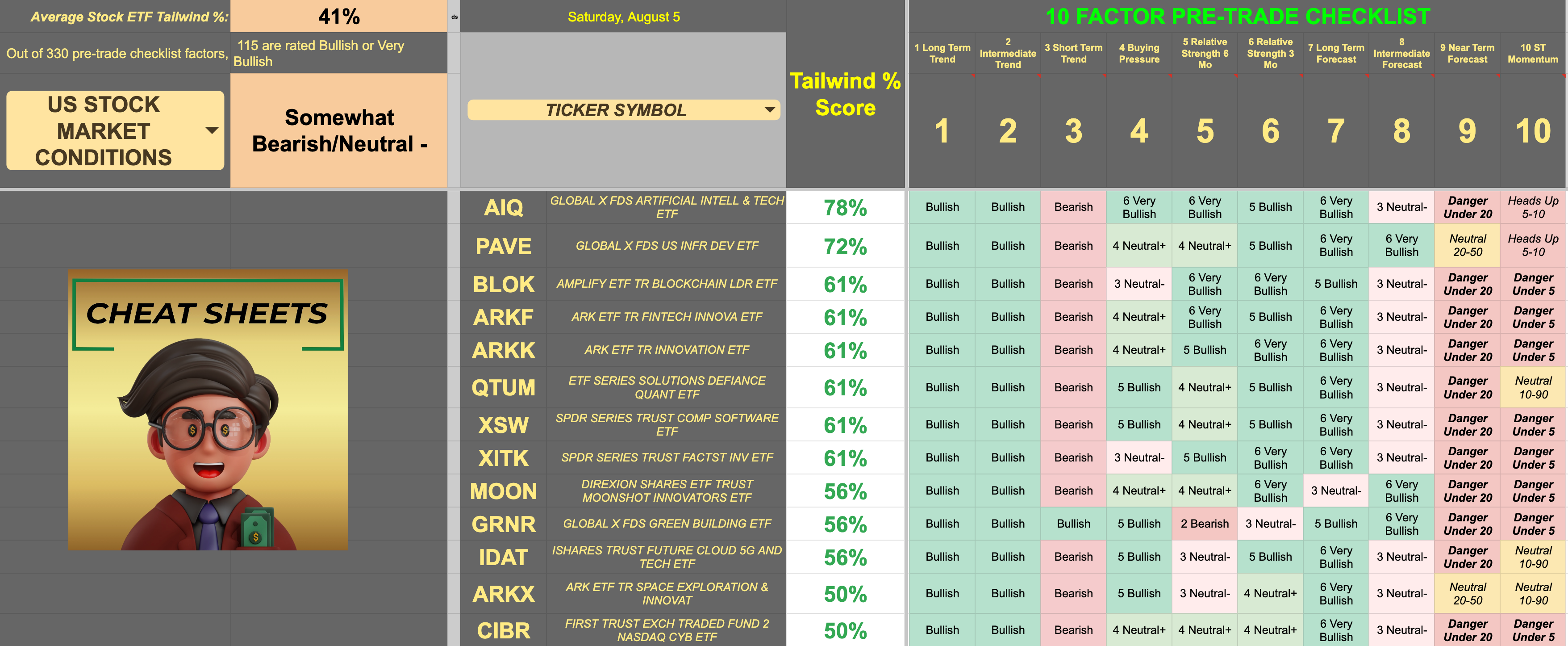
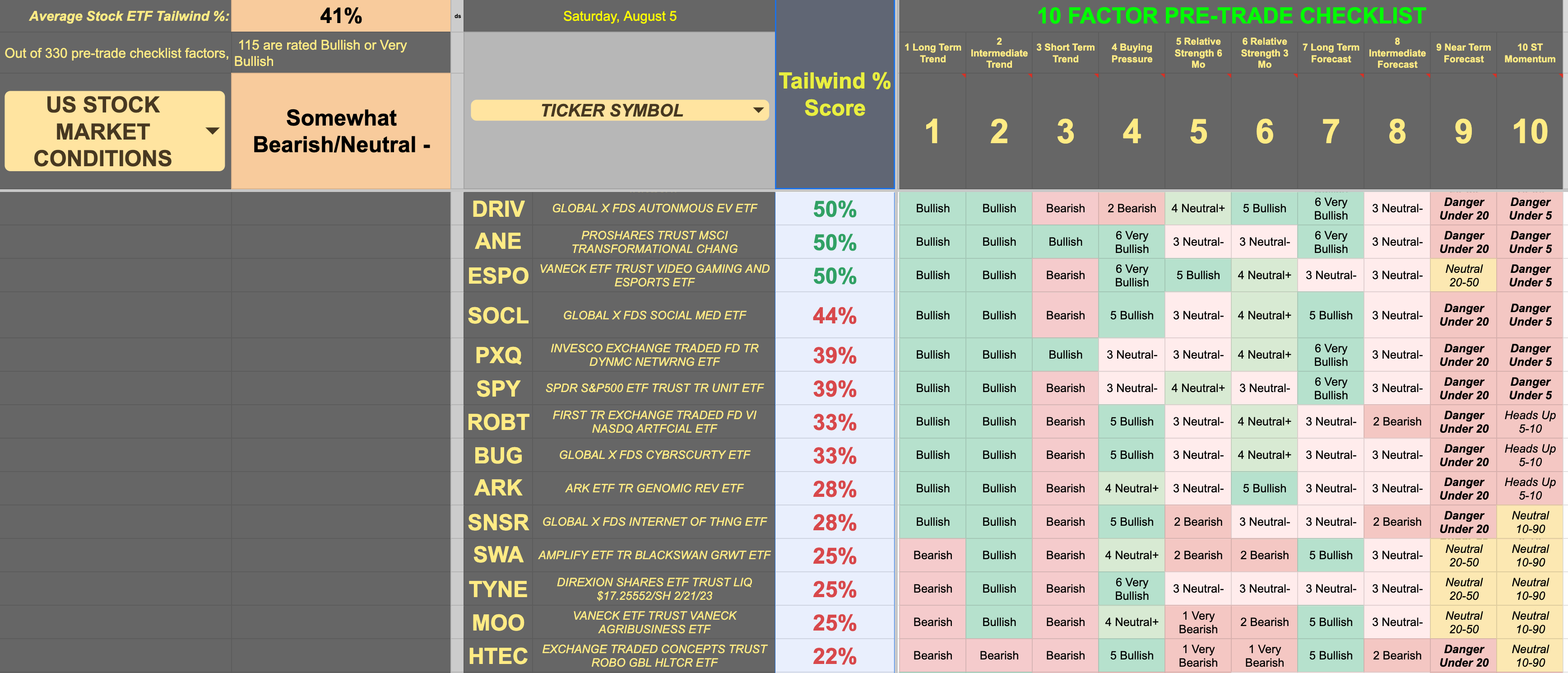
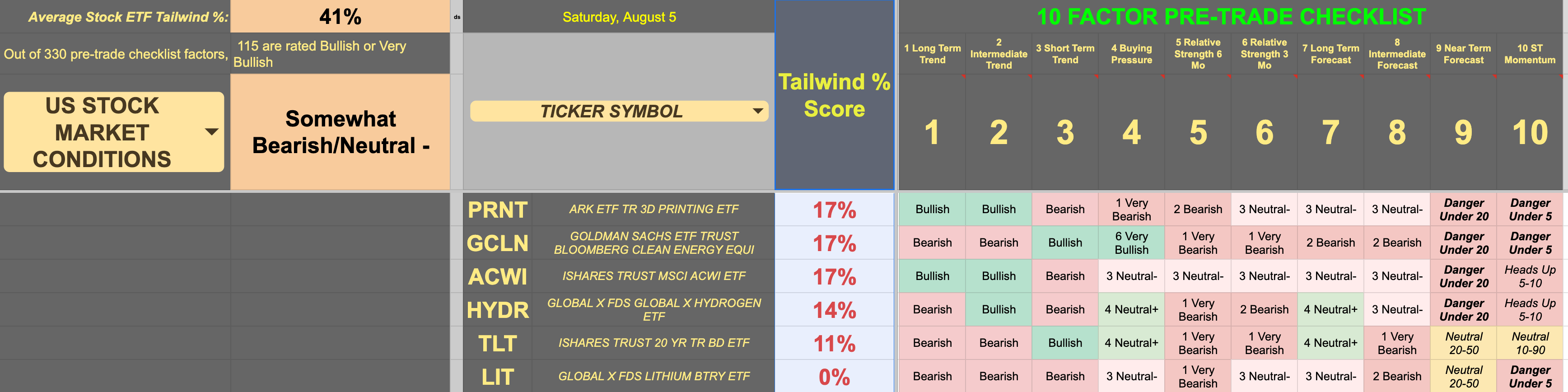
But, a few tech-ish ETFs resisted that downward momentum pressure.
Infrastructure (PAVE) and perhaps the Defiance Quant ETF (QTUM ) are worth watchlisting for set-up entries on any market bullish bounce or setting aside for digging deeper in the ETF’s individual company stock holding. These aren’t ideal conditions for all-in bullish, but selectively placing a few riskier bets with well thought out exits can deliver serious money in just a few months’ holding period.
The other metric worth watching for potential rebound candidates is Buying Pressure, which is Chaikin Money Flow.
AIQ (Artificial Intelligence ETF) will likely go through an intermediate market correction based on the forecast oscillators, but relative strength vs the broad market and buying pressure look outstanding, as does the 78% TW score.
MOON (Moonshot Innovations ETF) and CIBER (Cyber Security) are maintaining a balance of buying pressure and relative strength, albeit at weaker levels.
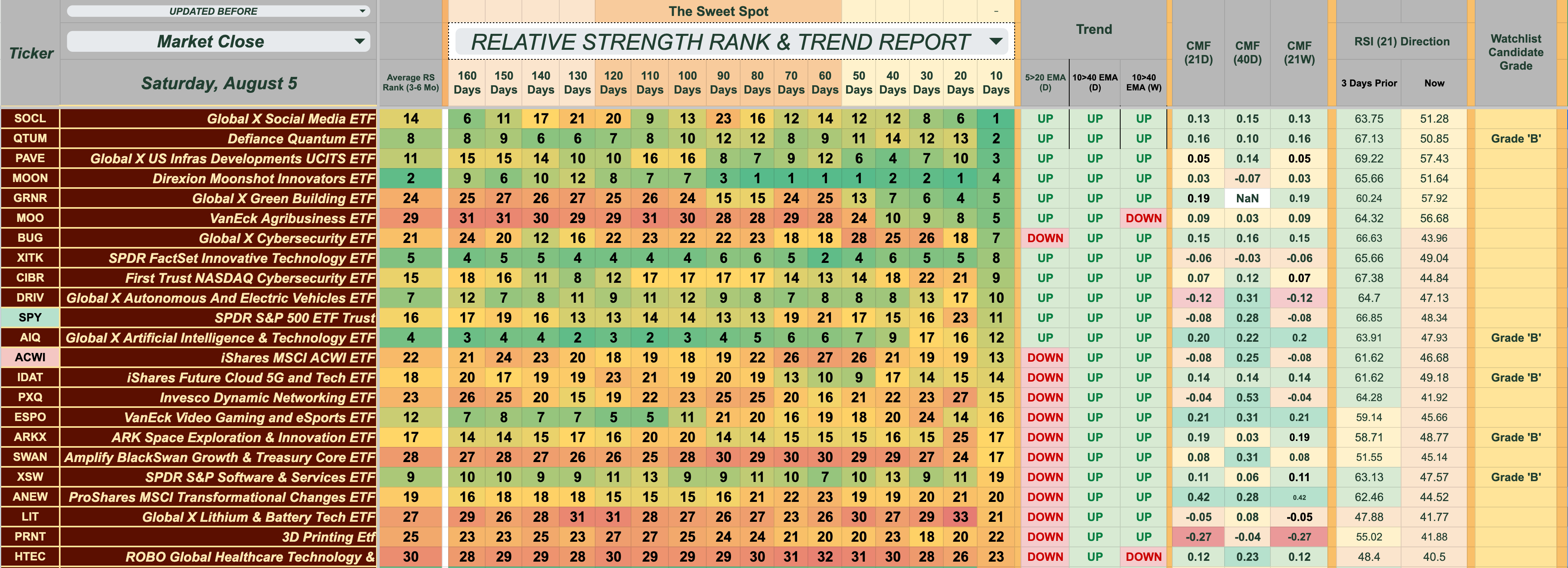
Global Tech Relative Strength Rank and Trend
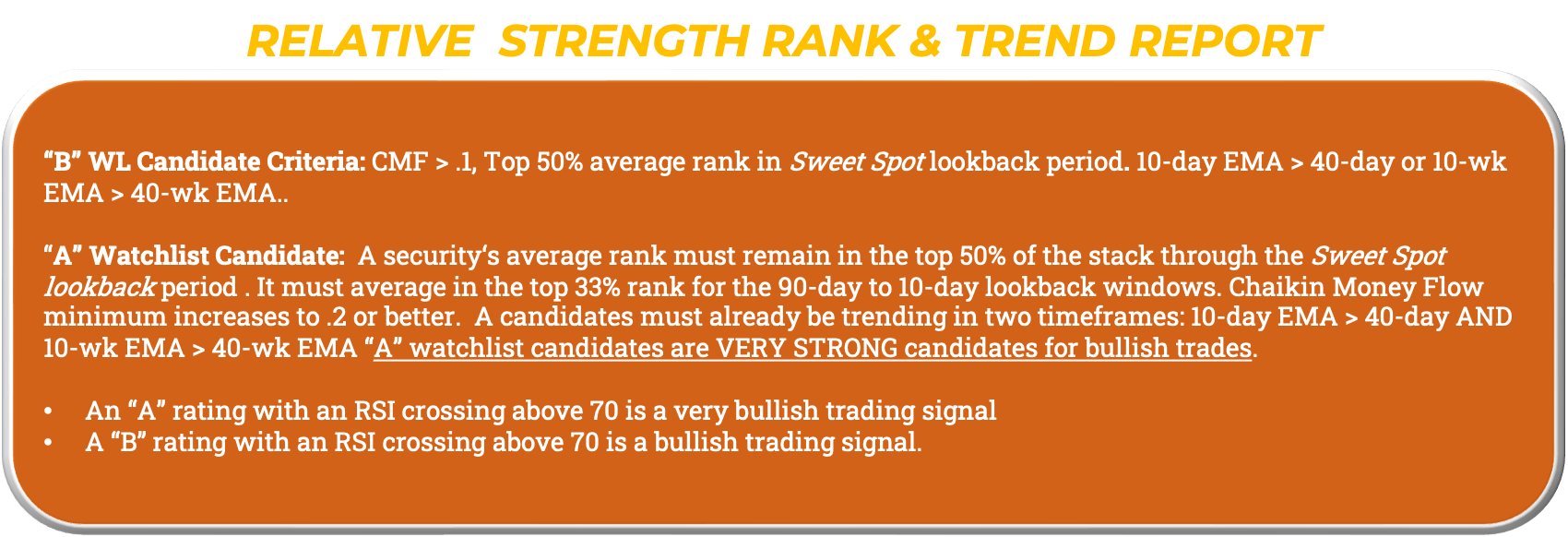
Perhaps a complementary or even better of way of assessing which parts of tech sector are likely to recover fastest and strongest (once we weather the summer swoon) is through relative strength rank trend comparisons. See below.
Start with money flow. CMF (21) is the most important reading of buying pressure. Above .1? Institutions are accumulating shares. Above .2? Institutions are aggressively accumulating shares.
SOCL (Social Media)
QTUM (Defiance Quant …again)
BUG (Cyber Security)
AIQ (Artificial Intel)
These ETFs are rotating into favor, bouncing back, or at least putting toe-in-the-water from a relative strength trend perspective. Just about all ETFs are declining in RSI, implying an intermediate correction is going on now.
SOCL climbed from 23rd to 1st in RS rank over the past 80 days, haviong maintained solid trend and CMF scores. The RSI is pulling down, which means the ETF could be poised to resume its trend soon.
QTUM has maintained top 50% rank in relative strength for weeks. Coupled with its strong other metrics, it’s actually earned a B watchlist rating. In these market conditions for tech, that’s saying something.
AIQ has fallen back in RS rank, but not badly
CIBR hasn’t earned much of an RS rank progression lately
BUG is very early on its relative strength rank progression, but it’s definitely going in my watchlist for future consideration.

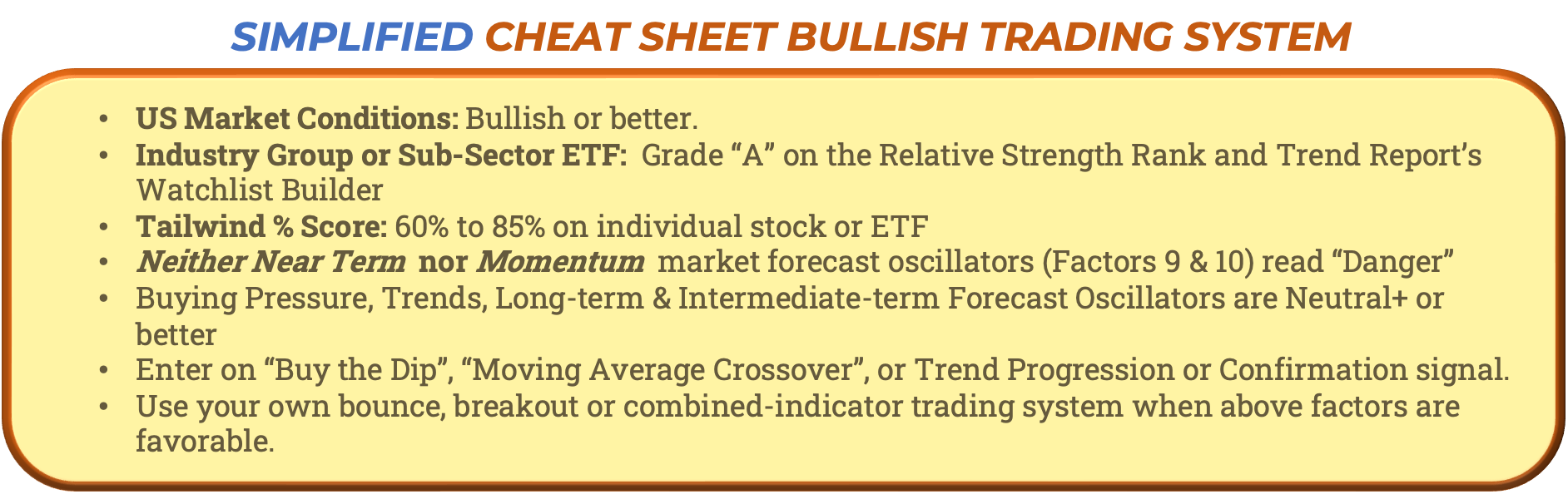
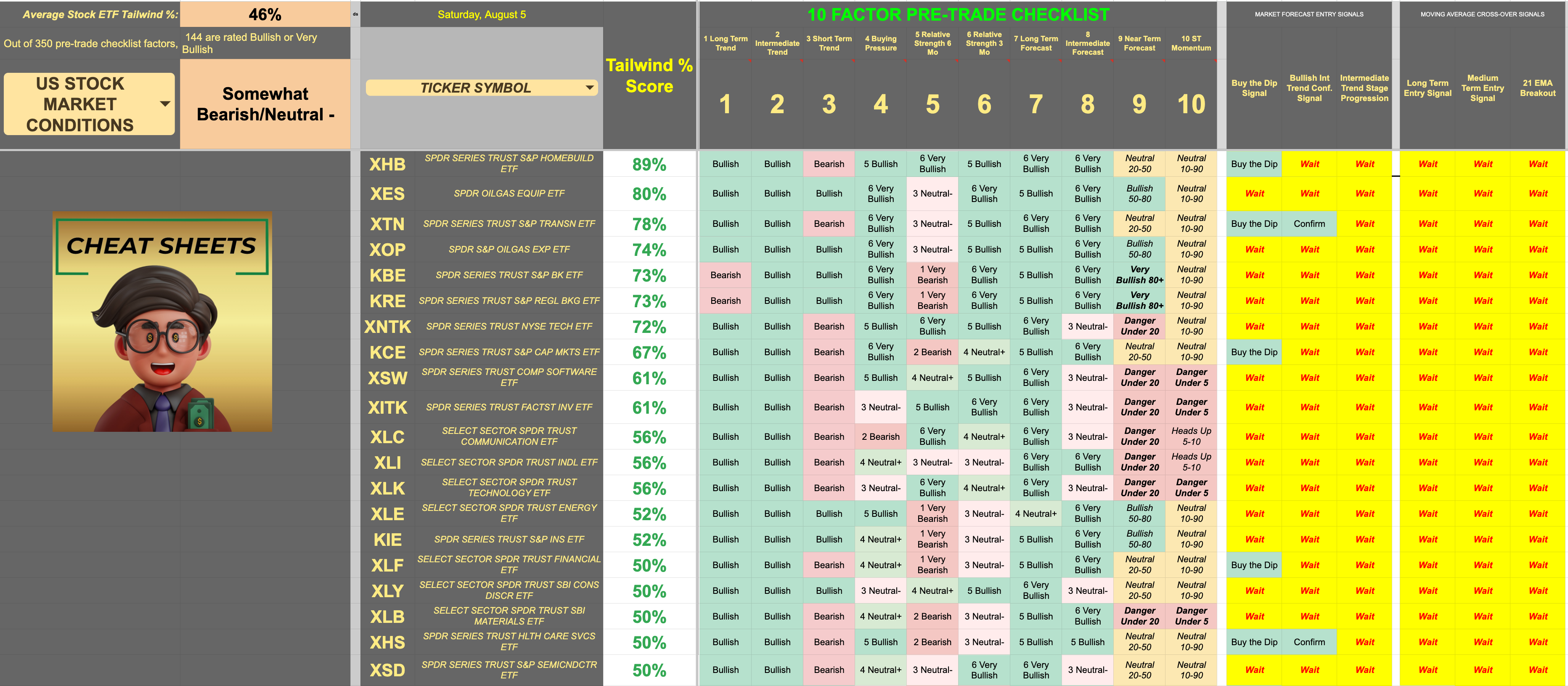
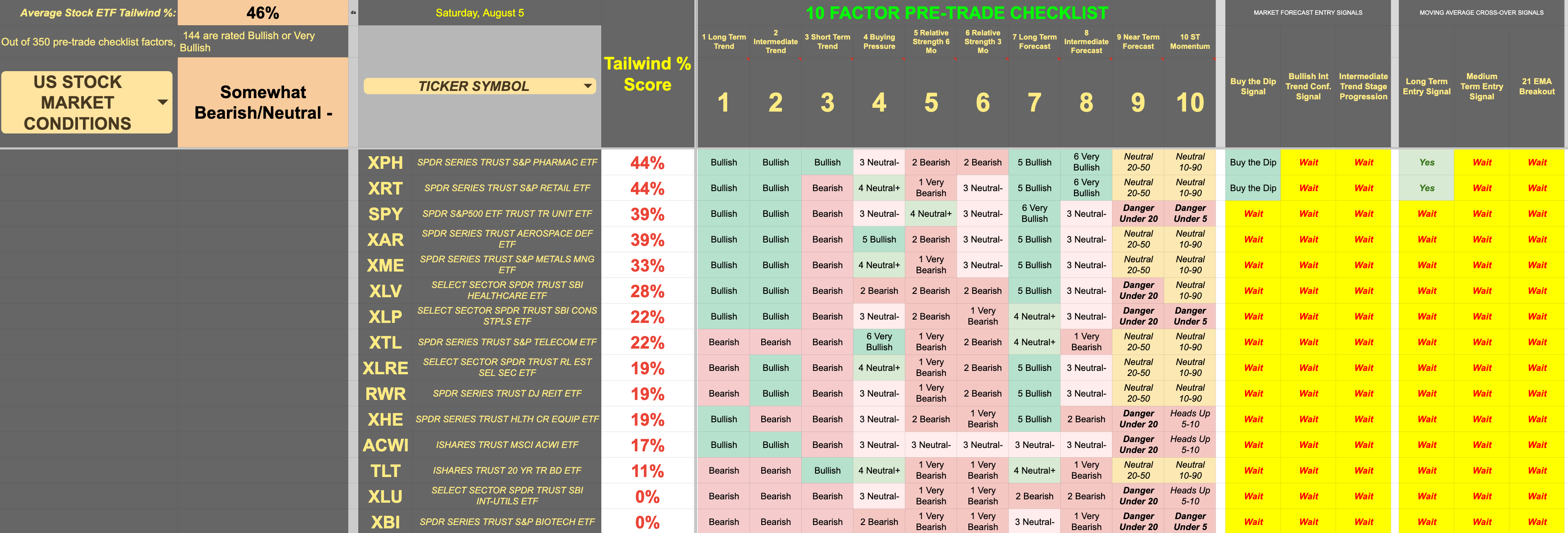
Before cherry picking tech stocks, it’s important to see how the broad US large cap tech index stacks up compared to other market indexes and how discrete components fare within US sectors and sub sectors. So, let’s wrap today’s analysis by reviewing overall market conditions.
US Sectors & US Sub-Sectors (click to enlarge)
Disclosure about Trading Risk
Take advantage of our free and premium email subscriptions. Get Cheat Sheet Trading Signals and Relative Strength Reports delivered via email each week. There is a 7-day Free Trial available for free-subscribers wishing to try Cheat Sheets Premium
Premium Cheat Sheets Premium Stacks
Let’s take a look at the top stock holdings in some of the specialty tech ETF’s discussed above: AIQ, PAVE,CIBR & BUG, QTUM. Remember, even though 80%+ of the S & P 500 Company stocks have reported, it’s important to check for earnings dates before trading. We review how we combine fundamentals and Cheat Sheet quant metrics when assessing these single company stocks below.
